
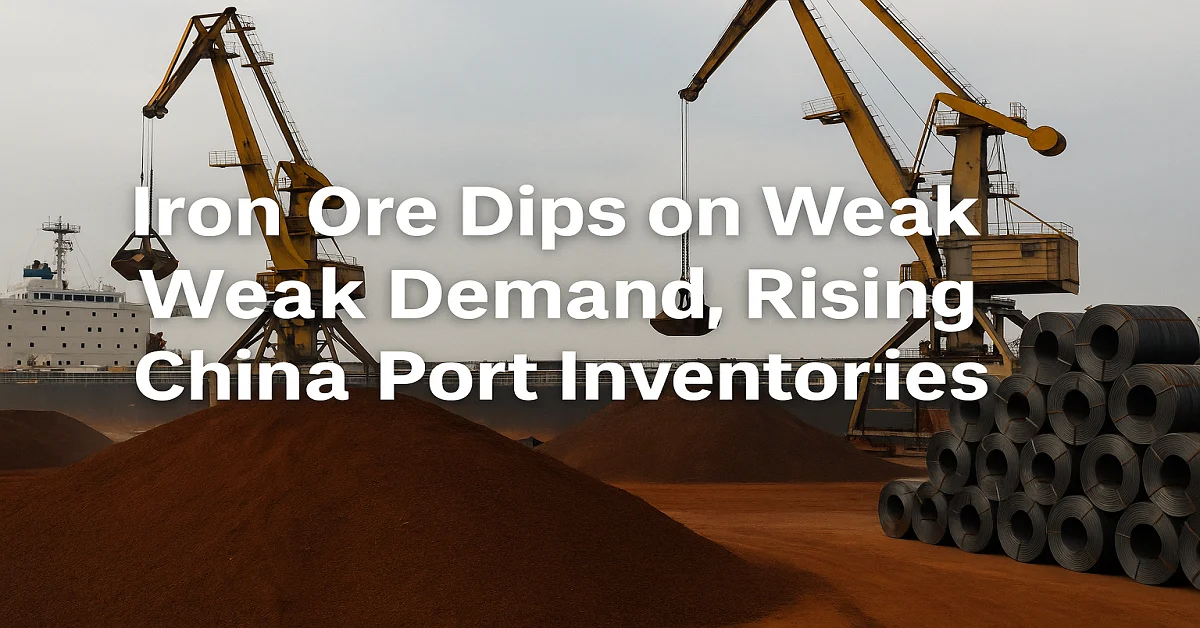
Iron ore dips on weak steel demand and rising China port inventories, putting additional pressure on the global steel industry. This trend has raised concerns among steel producers, especially as China—the world’s largest consumer of iron ore—struggles with sluggish construction demand and oversupply.
The Chart of the Day underscores how the steel sector is at a crossroads: balancing rising production with weak demand while navigating trade policies, energy transitions, and environmental regulations.
Introduction: Iron Ore Declines as Inventories Rise
The iron ore dips on weak steel demand, rising China port inventories trend signals an inflection point for the global steel industry. With China holding over 140 million tonnes of iron ore stockpiled at major ports, concerns of oversupply are mounting. This decline reflects weaker construction and real estate demand—historically key drivers of Chinese steel consumption.
Why Are Iron Ore Prices Falling?
1. Weak Demand from Steel Mills
- Chinese steel mills are cutting output due to sluggish property sector recovery.
- Automotive demand has slowed despite EV growth.
2. Rising Port Inventories
- Inventories at 45 major Chinese ports reached 145.6 million tonnes, up 5% MoM.
- Excess inventory suppresses spot iron ore prices.
3. Global Macroeconomic Conditions
- Interest rate hikes in the US and EU dampen construction activity.
- Global trade tensions affect steel exports and demand.
Outbound link suggestion: World Steel Association – Market Updates
Chart of the Day: Steel Sector at a Crossroads
The steel sector is experiencing contrasting forces:
- Positive: Energy transition projects, renewable energy infrastructure, and EV growth.
- Negative: Oversupply in Asia, weak construction demand in China, and rising raw material costs.
The chart highlights:
- Iron ore spot price dipped 4.2% in September 2025.
- Chinese steel production contracted by 3.5% YoY.
- Indian steel demand grew by 9% in FY25, partially offsetting global weakness.
Impact on Indian Steel Producers
- Tata Steel & JSW Steel: Benefiting from robust domestic demand, though export margins are under pressure.
- SAIL: Facing higher costs due to reliance on imported coking coal.
- Secondary Producers: Struggling with thinner margins amid rising energy costs.
Internal link suggestion: Read: Tata Steel, JSW Steel, SAIL To Be In Focus As Steel Manufacturers Raise Prices For August
Investor Sentiment
- Global investors are cautious on iron ore miners (Rio Tinto, BHP, Vale).
- Indian steel stocks remain resilient due to government-led infrastructure projects.
- Analysts warn of volatility in Q3 2025, urging cautious optimism.
Expert Commentary
- “Iron ore’s decline highlights structural demand weakness in China, with global ripple effects.” — Economist, Nomura
- “India’s growth is a bright spot, but global steel demand still faces downside risks.” — CRISIL Analyst
Long-Term Outlook
- China: Structural slowdown in real estate, focus on green steel transition.
- India: Expected to overtake EU as the second-largest steel consumer by 2030.
- Global: Iron ore demand growth may moderate to 2–3% CAGR till 2030.
Frequently Asked Questions (FAQ)
Q1: Why are iron ore prices falling in 2025?
Due to weak steel demand in China and rising inventories at ports.
Q2: How does this affect Indian steelmakers?
Lower iron ore costs help integrated producers, but export margins remain squeezed.
Q3: What is the significance of port inventories?
High inventories depress spot prices and signal oversupply.
Q4: Will steel demand recover?
Yes, medium-term demand from EVs, renewable energy, and infrastructure will support growth.
Q5: Is this good news for investors?
Short term—volatile. Long term—demand growth in India and Southeast Asia is supportive.
Conclusion
The iron ore dips on weak steel demand, rising China port inventories update highlights the challenges facing the global steel industry. While China’s slowdown drags the sector, India’s growth offers some balance.
The steel sector is at a crossroads—balancing oversupply, energy transition, and geopolitical trade tensions. Investors and policymakers must carefully navigate this environment to ensure stability.