
Why Flexible Steel Pipe Matters
Flexible steel pipe is a modern engineering solution that combines the strength of steel with the flexibility of rubber hoses. It is designed to handle high pressure, temperature, and movement without cracking or leaking. From oil refineries to plumbing, flexible steel pipes play a vital role in maintaining flow systems safely and efficiently.
In this detailed guide, we will explore what flexible steel pipe is, its types, applications, key benefits, real-world numbers, and frequently asked questions — all written in clear, professional, and SEO-optimized language.
What Is a Flexible Steel Pipe?
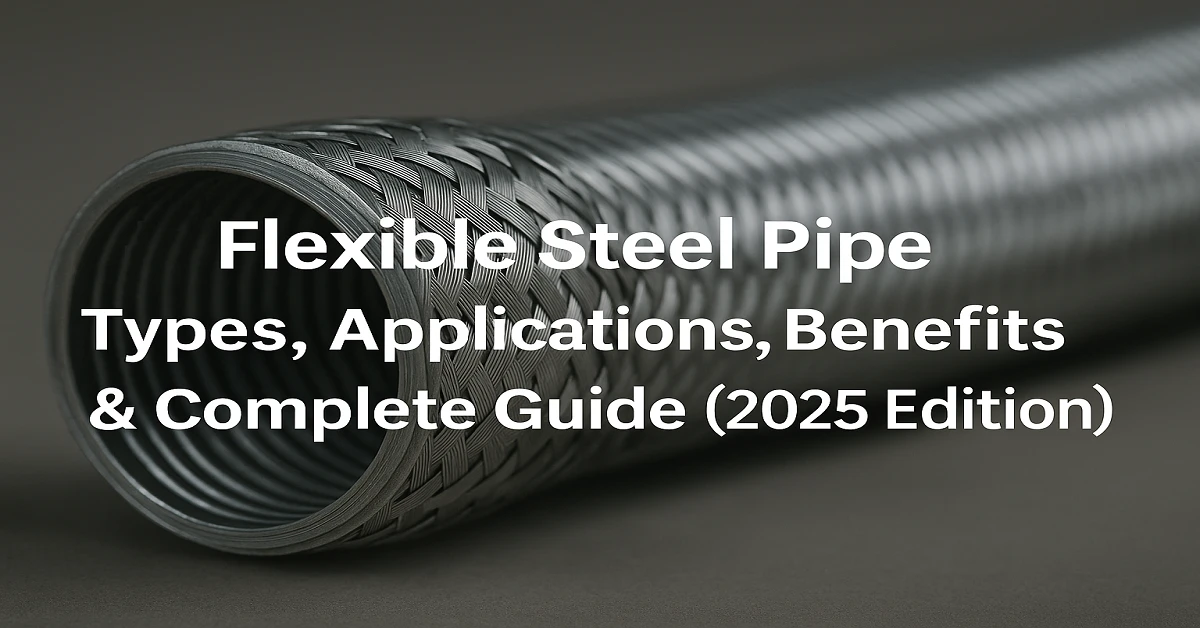
A flexible steel pipe (also called flexible metal hose) is a corrugated stainless steel tube designed to bend without breaking. It can transmit liquids or gases safely even under vibration, movement, or high temperature.
It consists of:
- A corrugated metal core that gives flexibility,
- A braided outer layer made of stainless steel wires for pressure reinforcement,
- And end fittings (flanges, threaded, or welded) to connect with systems.
This type of pipe is ideal for use where rigid pipes fail due to vibration or thermal expansion.
Key Advantages of Flexible Steel Pipe
1. Durability and Longevity
Flexible steel pipes resist corrosion, UV light, and heat better than most plastic or rubber alternatives. Stainless steel grades like SS304 or SS316 offer excellent performance for decades.
2. High Pressure and Temperature Resistance
They can withstand pressures up to 3000 PSI and temperatures ranging from -200°C to +600°C, making them perfect for oil, gas, and steam lines.
3. Vibration Absorption
These pipes absorb vibrations caused by pumps, compressors, or machinery, protecting joints and preventing leaks.
4. Easy Installation and Alignment
Because they can bend, installers can easily fit them in tight or complex spaces without using many joints or elbows.
5. Leak-Proof Safety
The metal corrugation and braided layers ensure no leakage even under pressure surges or thermal expansion.
Real-World Applications of Flexible Steel Pipe
| Industry | Application Example |
|---|---|
| Oil & Gas | Flowlines, injection lines, offshore flexible risers |
| HVAC & Plumbing | Boiler connections, gas fittings, flexible joints |
| Automotive | Exhaust systems, turbocharger hoses |
| Power Plants | Steam transport, turbine connections |
| Food & Pharma | Hygienic fluid transfer lines |
| Chemical & Marine | Acid-resistant connections, ballast systems |
Flexible steel pipes are also used in fire suppression systems, hydraulic lines, and building services where safety and adaptability are crucial.
Types of Flexible Steel Pipe
1. Corrugated Metal Hose (Annular Type)
Features circular corrugations that allow flexibility and pressure handling. Best for vibration absorption and high temperatures.
2. Helical Wound Hose (Spiral Type)
Made by winding metal strips helically — ideal for low-pressure exhaust or protection conduits.
3. Braided Reinforced Flexible Pipe
Adds one or two layers of braided stainless steel wires to increase burst strength and prevent elongation.
4. Spoolable Flexible Steel Pipe (e.g., FlexSteel®)
Combines a flexible core with steel layers to create long, reelable pipes used in oilfields — can be laid continuously up to 3,000 meters without welding.
Construction & Material Details
Most flexible steel pipes are manufactured from:
- Stainless Steel 304 / 316 / 321
- Galvanized or carbon steel (for specific industrial needs)
The pipe wall thickness varies between 0.15mm to 0.5mm, depending on the size and application.
A typical 1-inch SS flexible hose has a working pressure of 20 bar (290 PSI) and a burst pressure of around 80 bar (1160 PSI).
How Flexible Steel Pipes Are Made
The manufacturing process includes:
- Forming corrugations into a thin metal tube.
- Annealing the pipe for flexibility.
- Braiding one or two layers of wire mesh.
- Attaching fittings (by welding or crimping).
- Testing under pressure and vibration.
Each pipe must pass hydrostatic, helium leak, and fatigue cycle tests before dispatch.
Top manufacturers also perform eddy current inspection and X-ray testing to ensure flawless welds.
Technical Specifications (Example: SS304 Flexible Hose)
| Parameter | Specification |
|---|---|
| Diameter Range | 6mm to 300mm |
| Working Pressure | 10–300 bar |
| Temperature Range | -196°C to +600°C |
| Bending Radius | 3× outer diameter |
| End Connections | Flanged, Threaded, Welded |
| Standard | ISO 10380 / BS 6501 / ASTM A312 |
Source: ASTM Standards & ISO 10380:2012 for Metal Hose Testing
Flexible Steel Pipe vs Rigid Steel Pipe
| Feature | Flexible Pipe | Rigid Pipe |
|---|---|---|
| Movement | Can bend easily | Fixed shape |
| Joints | Fewer joints needed | Multiple welds or elbows |
| Installation | Quick & cost-effective | More labor required |
| Maintenance | Absorbs vibration, less wear | Higher stress, prone to cracks |
| Life Span | 15–25 years | 20–30 years (but needs more care) |
Conclusion: Use flexible pipes where vibration, misalignment, or movement exists. Use rigid pipes for static, straight runs.
Safety Standards and Certifications
Flexible steel pipes are manufactured and certified according to:
- ISO 10380 – Corrugated metal hose standards
- BS 6501 – Hose assemblies and pressure testing
- API 17J – Flexible pipe systems for offshore oil & gas
- ASTM A240 / A312 – Stainless steel material grades
- PED (European Pressure Equipment Directive) compliance
These certifications ensure reliability, safety, and performance under extreme conditions.
Installation Guidelines
To ensure maximum life and safety:
- Avoid twisting or over-bending during installation.
- Maintain the minimum bending radius.
- Use flexible supports and proper alignment.
- Tighten flanges or couplings evenly.
- Test for leaks before starting operation.
- Periodically inspect for wear, fatigue, or corrosion.
Pro Tip: Always install with at least 10% slack length to accommodate thermal expansion and vibration.
Maintenance Tips
- Clean regularly to prevent dust or salt deposits.
- Replace braided layers if damaged.
- Use protective sleeves in corrosive environments.
- Follow manufacturer’s inspection intervals.
- Never weld or repair damaged hoses — always replace them.
Real-World Example: FlexSteel® Pipe (USA)
The FlexSteel® brand manufactures spoolable flexible steel pipes widely used in U.S. oilfields.
Its 2-inch, 3,000 PSI pipe can handle both sweet and sour crude with excellent fatigue life.
The pipe’s operating bend radius is around 2.1 feet, making it ideal for quick reel deployment and minimal joints.
Operators have reported installation time savings of up to 60% compared to welded steel pipes.
Environmental & Economic Benefits
- Less Welding = Fewer Emissions: Reduces fuel consumption during installation.
- Recyclable Materials: 100% steel, eco-friendly and reusable.
- Lower Maintenance Costs: Long service life means fewer replacements.
- Leak Prevention: Minimizes oil and chemical spills.
Common Questions (FAQ)
1. What is the lifespan of a flexible steel pipe?
Typically between 15 to 25 years, depending on temperature, pressure, and environment.
2. Can flexible steel pipes handle high pressure?
Yes. Premium pipes can handle up to 3000 PSI, depending on design and material grade.
3. Are they suitable for gas and steam lines?
Absolutely. Stainless steel flexible pipes are widely used for steam, LPG, and natural gas due to their heat and corrosion resistance.
4. How do I choose the right flexible pipe?
Check diameter, pressure rating, temperature range, and ensure compliance with ISO or API standards.
5. What’s the difference between corrugated and braided flexible pipes?
Corrugated pipes provide flexibility, while braided layers give strength and pressure containment. Most industrial hoses use both.
6. Can I use flexible steel pipe for residential plumbing?
Yes, in specific cases — such as water heater or gas line connections. Always follow local codes.
7. What is the price of flexible steel pipe in India?
Prices vary between ₹250 to ₹800 per meter depending on diameter and grade.
Summary
Flexible steel pipe is the perfect blend of strength and flexibility. It handles vibration, pressure, and temperature where rigid pipes fail.
From industrial flowlines to household applications, it ensures safety, longevity, and efficiency.
When selecting a flexible pipe, always consider material grade, pressure rating, and certified manufacturing standards.
Its increasing adoption across industries is a testament to its reliability and performance.