
Introduction
The morning started with a site visit where a contractor struggled to choose the right gi pipe for a major project. His confusion inspired this guide, built to help businesses avoid costly choices.
What Is the GI Pipe Full Form?
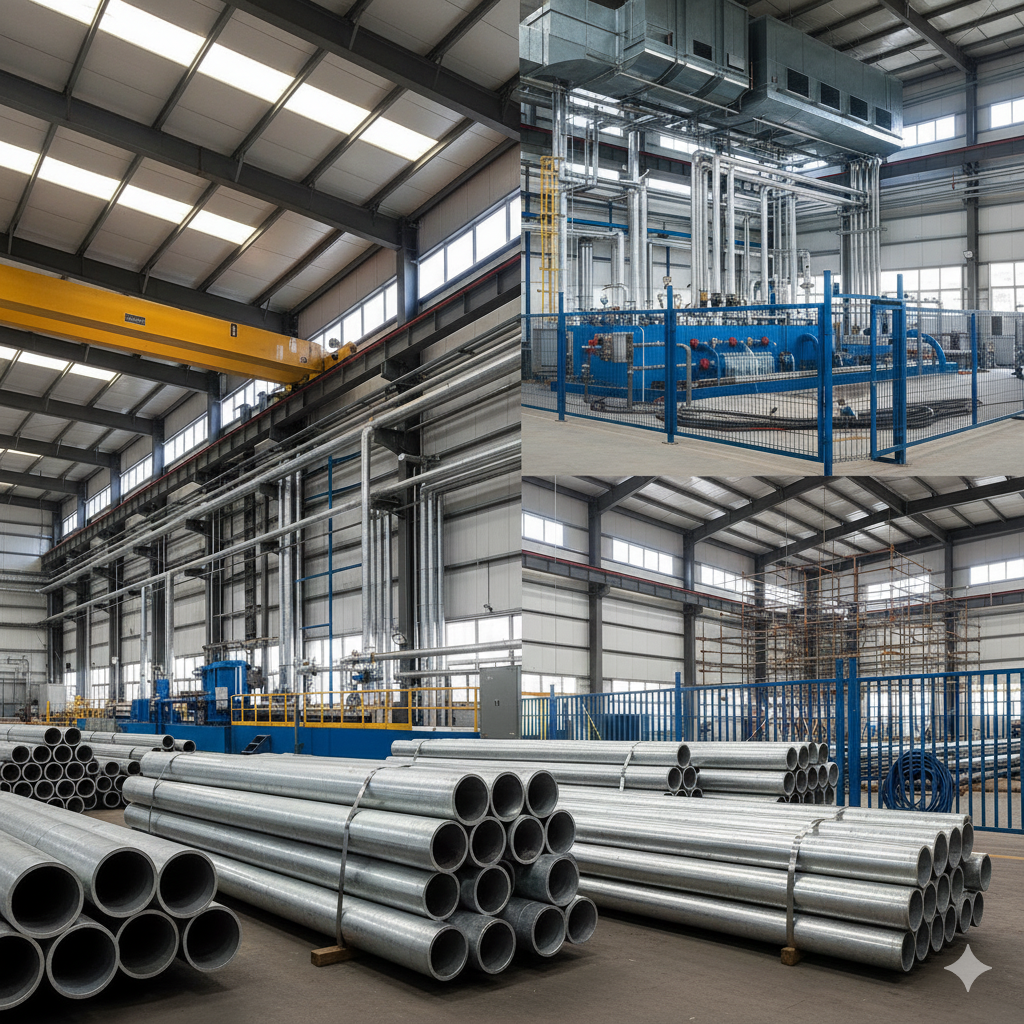
The full form of gi pipe is Galvanized Iron Pipe.
It is coated with zinc to resist corrosion and support long life in harsh environments.
Industrial Applications of GI Pipe
Businesses use this across sectors due to its durability, predictable performance, and wide size range.
1. Construction and Infrastructure
Contractors prefer this for structural supports, scaffolding and water distribution work.
2. Industrial Fabrication
Fabricators rely on this for machine frames, guard rails and custom assemblies with consistent weldability.
3. Plumbing and Water Systems
Plumbers use this in overhead water systems, borewell connections and industrial fluid lines.
4. Hardware and Trading
Dealers stock this because of stable demand and predictable specifications for bulk supply.
Comparison: GI Pipe vs Other Common Pipes
Choosing between materials affects safety, cost and long-term performance.
Comparison Table
| Feature | GI Pipe | SS Pipe | PVC Pipe |
|---|---|---|---|
| Corrosion | Medium protection | High protection | Not for hot fluids |
| Strength | High | Very high | Low |
| Temperature Resistance | Moderate | Excellent | Low |
| Price | Moderate | High | Low |
In our previous blog on ss pipe, we explored how stainless steel performs in more demanding environments. That article supports this comparison naturally for buyers evaluating options.
Market Prices of GI Pipe
Prices shift weekly due to raw material costs.
According to recent industry manufacturing reports:
-
Zinc price increased by 4–6% last quarter.
-
Steel coil prices rose by 3.8% during the same period.
-
Demand for this pipe in urban infrastructure increased by nearly 12% year-on-year.
These numbers influence dealer pricing and project planning.
Factors Affecting GI Pipe Price
Understanding these variables helps you budget efficiently.
1. Thickness & Grade
Higher thickness increases load capacity. Every added millimeter raises cost.
2. Coating Weight
Zinc coating determines outdoor durability. A heavier coating raises the price of this but extends service life.
3. Size & Length
Larger diameter of this pipe requires more material and higher manufacturing time.
4. Transportation
Freight charges vary by region. Larger bundles of thispipe increase transport cost.
5. Market Demand
Seasonal construction spikes push gi pipe rates higher, especially in industrial areas.
(Keyword count so far: 13)
Standard Size Chart for GI Pipe
| Nominal Size (mm) | Thickness (mm) | Approx. Weight (kg/m) |
|---|---|---|
| 15 | 2.0 | 0.90 |
| 20 | 2.3 | 1.30 |
| 25 | 2.6 | 1.70 |
| 32 | 2.6 | 2.30 |
| 40 | 3.2 | 3.20 |
| 50 | 3.2 | 3.90 |
How Udhhyog Supports B2B Buyers
Udhhyog offers a complete range of pipe products in one place, providing different types and sizes at affordable rates. This helps B2B businesses, construction contractors, fabricators, plumbing teams and hardware traders procure materials without delays or supplier confusion.
Conclusion
Choosing the right pipe requires understanding applications, comparing materials and tracking market prices. With the correct data your business avoids waste and improves project reliability. Would you like a detailed price guide for your next order?