
A fabrication unit once struggled with delayed orders because suppliers kept sending incorrect GI pipe sizes. The team measured again, revised drawings, and recalculated loads. That single mismatch changed their entire project schedule. This guide ensures you never face such chaos again.
Understanding GI Pipe Sizes
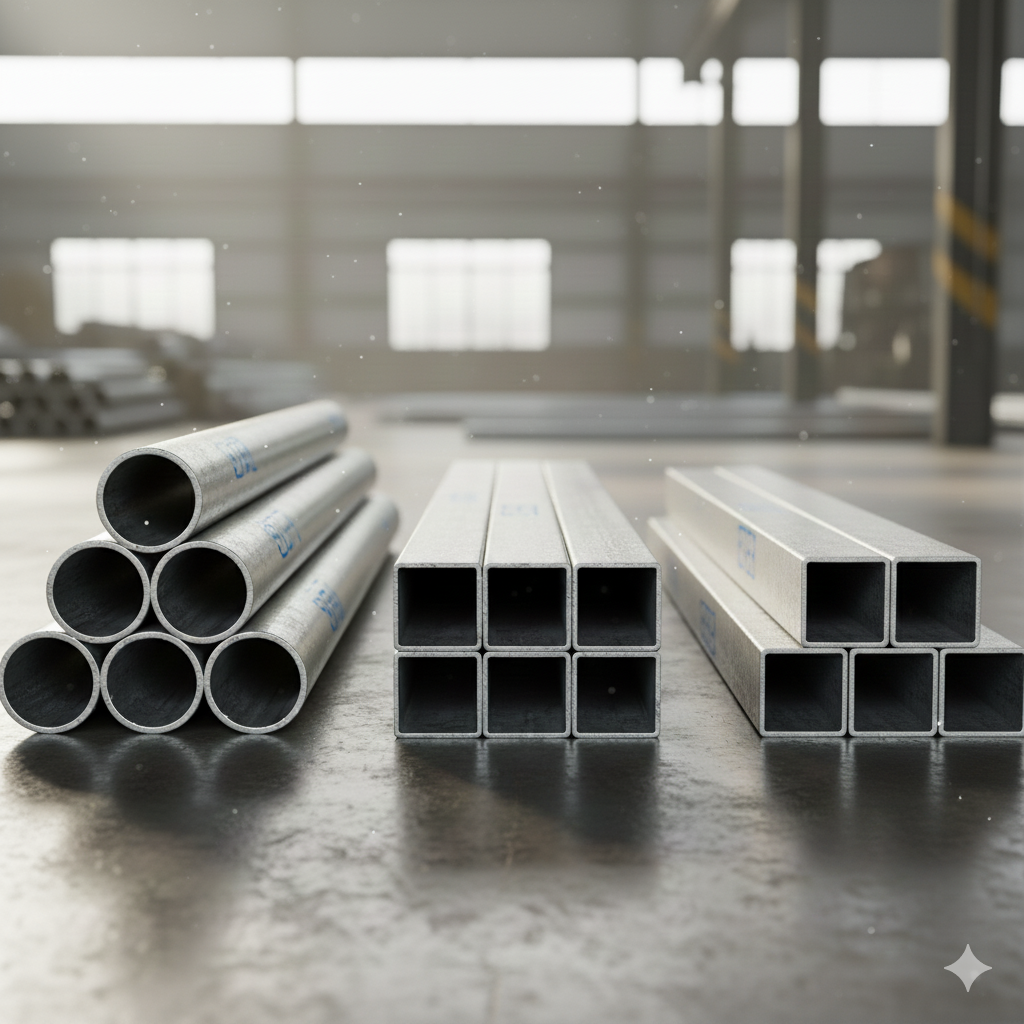
GI pipes come in many dimensions. Each size serves a specific load, structural, or flow requirement. Choosing the correct size helps avoid waste, rework, and cost overruns.
GI Pipe Sizes Chart
Round GI Pipe Size Chart (Nominal Bore – NB)
| Size (NB) | OD (mm) | Thickness (mm) | Weight (kg/m) |
|---|---|---|---|
| 15 mm | 21.3 | 2.0 | 1.20 |
| 20 mm | 26.9 | 2.3 | 1.70 |
| 25 mm | 33.7 | 2.6 | 2.40 |
| 32 mm | 42.4 | 2.6 | 3.20 |
| 40 mm | 48.3 | 2.9 | 4.20 |
| 50 mm | 60.3 | 3.2 | 5.80 |
Square GI Pipe Sizes
| Size (mm) | Thickness (mm) | Weight (kg/m) |
|---|---|---|
| 20×20 | 1.2 | 0.70 |
| 25×25 | 1.5 | 1.00 |
| 40×40 | 2.0 | 2.30 |
| 50×50 | 2.5 | 3.50 |
Rectangular GI Pipe Sizes
| Size (mm) | Thickness (mm) | Weight (kg/m) |
|---|---|---|
| 40×20 | 1.6 | 1.30 |
| 60×40 | 2.0 | 2.80 |
| 80×40 | 2.5 | 4.10 |
Graph: Weight Comparison of GI Pipes
Below is a simple weight comparison for reference:
Weight (kg/m)
Round: 1.2 → 5.8
Square: 0.7 → 3.5
Rectangular: 1.3 → 4.1
This variation helps contractors and fabricators estimate load and material consumption accurately.
Applications of GI Pipe Sizes
Different industries prefer different dimensions:
Construction Contractors
They use larger round pipes for scaffolding, handrails, and structural frames. Square and rectangular pipes support gates, trusses, and sheds.
Industrial Fabricators
Precise sizing affects bending, welding, and load calculations. Incorrect sizes lead to redesigning and extra fabrication hours.
Plumbing and Infrastructure Companies
Round pipes dominate plumbing due to better flow consistency and easy threading.
Hardware Dealers and Traders
They stock common sizes for quick B2B supply and faster turnover.
Comparison: Round vs Square vs Rectangular GI Pipes
Round Pipes
Best for fluid movement and uniform pressure distribution.
Square Pipes
Used where aesthetics and symmetric load distribution matter.
Rectangular Pipes
Popular for frames, gates, and sections requiring wide-face strength.
Each project needs a clear comparison before deciding the correct size. The right choice avoids material waste and improves project efficiency.
Prices and Market Trend
GI pipe prices change frequently. The key factors include:
1. Raw Material Cost
Steel price fluctuations affect the final GI pipe cost directly.
2. Zinc Coating Thickness
Higher coating thickness increases durability and the price.
3. Size and Weight
Heavier and larger pipes naturally cost more due to increased material.
4. Market Demand
Infrastructure growth in India affects monthly price trends.
5. Brand and Manufacturing Standards
Pipes following IS standards hold higher value and better consistency.
Factors Affecting GI Pipe Size Selection
Selecting the wrong size causes leakage, vibration, and structural weakness. Consider these points:
• Load requirement
• Pressure or flow need
• Welding and fabrication process
• Site conditions
• Project budget
Many B2B buyers also check our previous article on SS pipes, especially when comparing corrosion resistance and long-term value.
How Udhhyog Supports Buyers
Udhhyog and its pipe Products help businesses find all GI pipe sizes in round, square, and rectangular options. We assist B2B buyers, contractors, fabricators, plumbing companies, and hardware traders by offering multiple sizes and types in one place at affordable rates.
Conclusion
GI pipe sizes affect cost, strength, and project timelines. With the correct size chart, every business can plan accurately and avoid expensive errors. Are you ready to select the perfect GI pipe size for your next project and speak with our team today?