
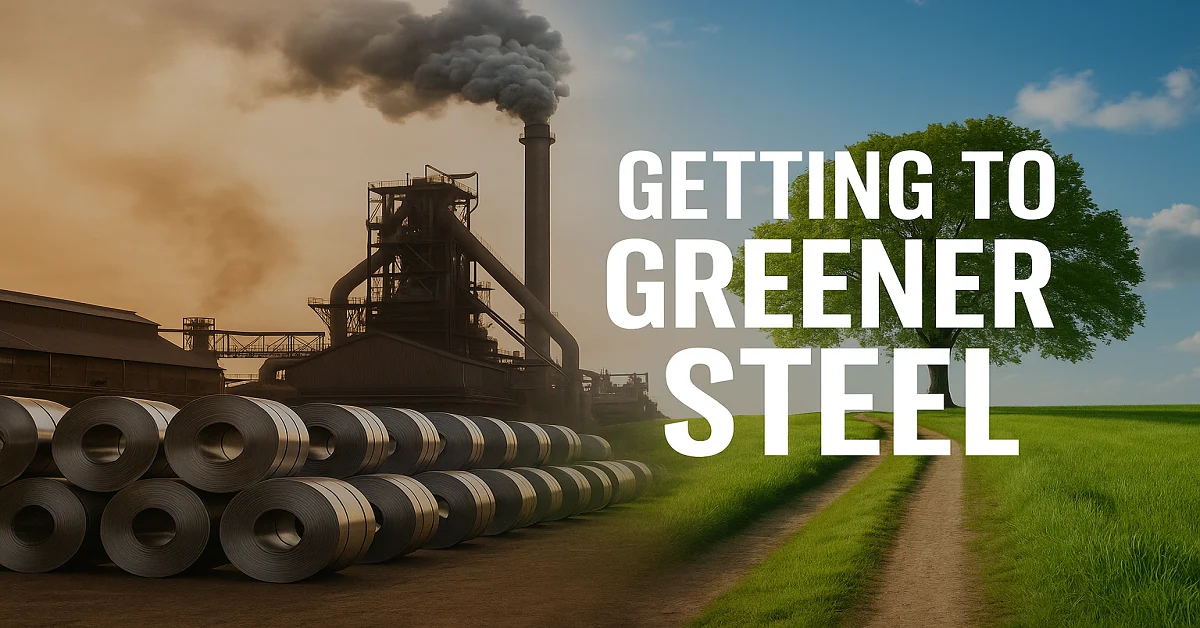
The global steel industry is undergoing a transformation, with increasing pressure to cut emissions and adopt low-carbon solutions. Getting to greener steel requires a multi-pronged approach—shifting to renewable-powered furnaces, expanding recycling, introducing green hydrogen, and creating transparent carbon-tracking systems.
This article explores what “green steel” means, why it matters, and how governments, companies, and investors are reshaping the steel industry for a sustainable future.
Introduction: Why Getting to Greener Steel Matters
The getting to greener steel journey is vital because steel production currently accounts for about 7–8% of global CO₂ emissions. As infrastructure, automobiles, and renewable energy projects demand more steel, the industry must innovate to stay sustainable.
Governments are pushing regulations like the EU Carbon Border Adjustment Mechanism (CBAM), while major companies are launching green steel identities to attract eco-conscious buyers. Achieving greener steel is no longer optional—it is central to the survival of the industry.
What is Green Steel?
- Definition: Steel produced with reduced or zero carbon emissions.
- Methods:
- Electric Arc Furnaces (EAFs) using scrap and renewable power.
- Hydrogen-based Direct Reduced Iron (H-DRI).
- Carbon capture in blast furnaces.
- Goal: Lower carbon intensity per tonne of steel produced.
The Road to Greener Steel: Key Pathways
1. Recycling and Scrap Usage
Steel is already the most recycled material, with a global recycling rate of 85%. Expanding scrap usage cuts energy demand and emissions by up to 70% compared to virgin iron ore.
2. Green Hydrogen Adoption
- Companies in Sweden (HYBRIT, H2 Green Steel) and India are piloting hydrogen-based furnaces.
- Hydrogen could reduce steelmaking emissions by 90% if scaled.
3. Renewable Energy Integration
Replacing coal and natural gas with solar, wind, and hydro in powering EAFs.
4. Carbon Capture and Storage (CCS)
Capturing CO₂ emissions from blast furnaces for reuse or underground storage.
Outbound link suggestion: World Steel Association – Sustainability
Global Leaders in Greener Steel
- ArcelorMittal: Investing €1.7 billion in green steel projects in Spain.
- SSAB Sweden: A pioneer in fossil-free steelmaking.
- JSW Steel India: Integrating solar-powered EAFs.
- EMSTEEL: Recently launched TrueGreen sustainability identity.
Internal link suggestion: Read our article: EMSTEEL TrueGreen Sustainability Identity for Low-Carbon Steel Production
Financial Impact of Green Steel
- Production costs are currently 20–30% higher than conventional steel.
- However, customers in automotive and renewables are willing to pay a green premium.
- Green steel companies gain better access to sustainability-linked bonds and financing.
Challenges to Getting to Greener Steel
- High Costs of hydrogen and renewable energy infrastructure.
- Technology Gaps in scaling hydrogen furnaces globally.
- Supply Chain Barriers in securing affordable scrap metal.
- Policy Uncertainty across different countries.
Expert Insights
- “Green steel is not just about cleaner furnaces. It’s about redesigning the supply chain for circularity and transparency.” — CRISIL Analyst
- “Automakers will be the biggest drivers of demand, as EVs need low-carbon materials to meet net-zero goals.” — Economist, World Steel Association
Future Outlook
By 2030, green steel could account for 10–15% of global production. By 2050, nearly all steel must be produced with net-zero emissions to meet Paris Agreement goals.
Frequently Asked Questions (FAQ)
Q1: What does ‘getting to greener steel’ mean?
It means reducing the carbon footprint of steel production through recycling, renewable energy, hydrogen, and innovation.
Q2: Is green steel more expensive?
Yes, but the costs are falling as technology improves.
Q3: Which countries are leading in green steel?
Sweden, Germany, Japan, and India are making significant progress.
Q4: What role does hydrogen play?
Hydrogen replaces coal in reducing iron ore, cutting CO₂ emissions.
Q5: Will all steel be green by 2050?
Nearly all must be, if global climate targets are to be achieved.
Conclusion
The getting to greener steel journey is a cornerstone of global decarbonization. By combining recycling, hydrogen technology, renewable energy, and carbon capture, the industry is building a roadmap toward net zero.
Steel companies that adopt sustainable practices today will not only survive but thrive in tomorrow’s carbon-conscious economy.