
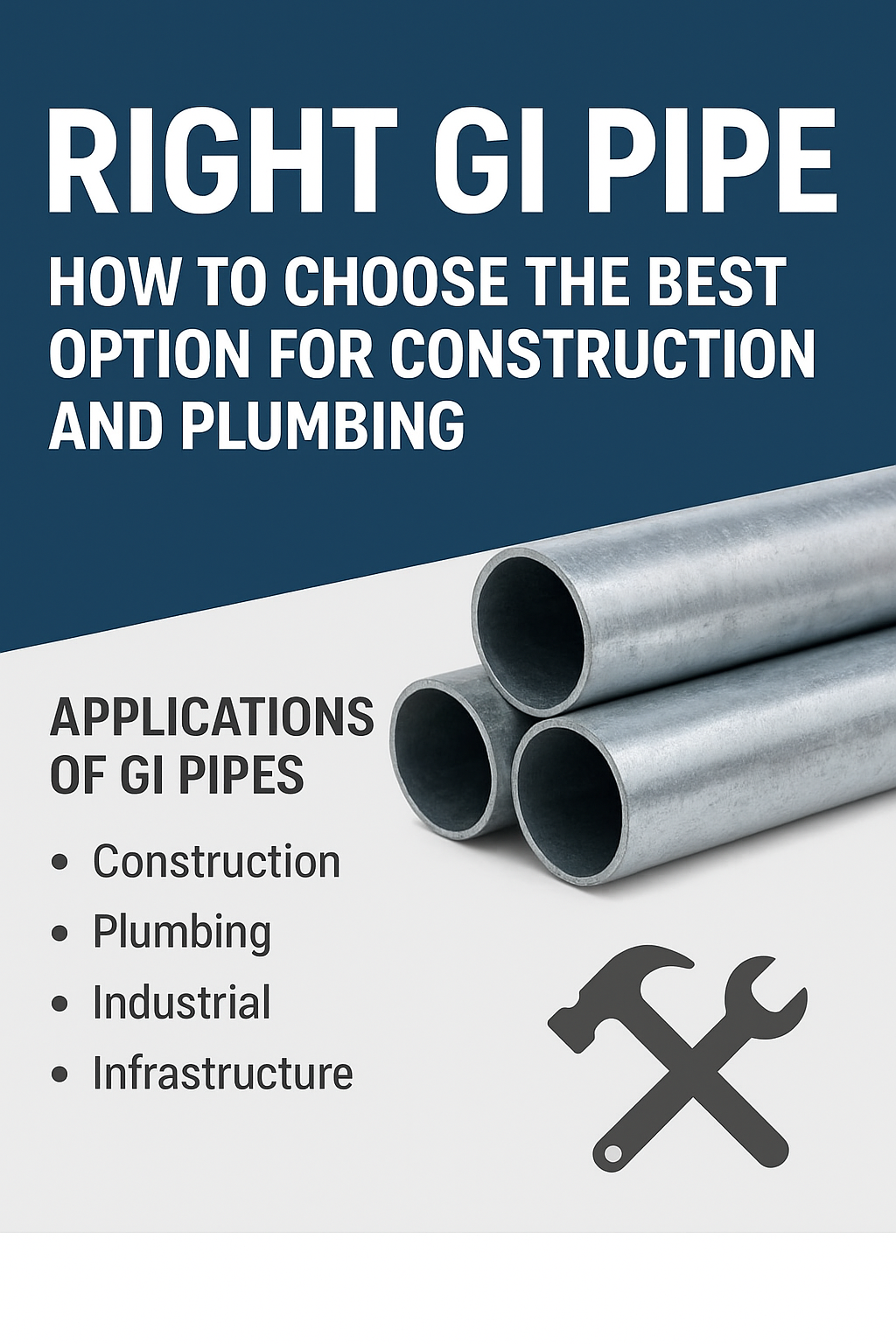
The site engineer stood confused as three suppliers quoted three different GI pipe rates. The project timeline was tight, and choosing the wrong specification could delay the entire site. This situation reflects what many B2B buyers face today when selecting the right GI pipe for diverse projects.
Understanding GI Pipes for Modern Projects
GI pipes are widely used in water supply, structural work, industrial lines, and fabrication. Their zinc-coated surface offers long-term durability in harsh environments, making them essential for infrastructure development. According to India’s building material market data, annual GI pipe consumption crossed 10 million tonnes in 2024, showing strong usage across sectors.
Most B2B buyers compare GI pipes with the materials discussed in our previous SS pipe blog, especially when corrosion resistance is a priority. This helps companies evaluate long-term performance before choosing the final pipe grade.
Applications of GI Pipes in Major Industries
GI pipes support many industries with consistent performance.
1. Construction Sector
Contractors use these pipes for scaffolding, structural supports, and rainwater systems. Their coating helps reduce rust in open environments.
2. Plumbing and Water Supply
Plumbing companies prefer GI pipes for overhead tanks, water distribution and bore connections. These pipes maintain strength under pressure variations.
3. Industrial Fabrication
Fabricators depend on GI pipes for making frames, conveyor structures and equipment guards. The material supports easy welding during fabrication processes.
4. Hardware Dealers and Traders
Dealers maintain wide size ranges for retail orders and bulk industrial buyers. GI pipes move quickly in the B2B market due to price stability.
Comparison: GI Pipe vs Other Pipe Options
Below is a simple comparison that helps buyers choose correctly.
| Pipe Type | Strength | Corrosion Resistance | Price Level | Common Use |
|---|---|---|---|---|
| GI Pipe | High | Medium | Moderate | Plumbing, construction |
| SS Pipe | Very high | Very high | High | Food, pharma, chemical lines |
| MS Pipe | Medium | Low | Low | Fabrication, general structures |
Data sourced from common industry standards and Indian pipe market reports.
Price Trends and Size-Wise Market Overview
GI pipe prices fluctuate based on raw materials, demand and zinc rates. The following sample table shows typical patterns seen in the Indian B2B markets.
| Nominal Bore (NB) | Average Price Range (₹/Kg) | Market Demand Level |
|---|---|---|
| 15mm | 72–80 | High |
| 25mm | 74–82 | Very High |
| 40mm | 76–85 | High |
| 80mm | 78–88 | Medium |
Prices vary across regions, distributors and zinc prices.
Major Factors Affecting GI Pipe Price in 2025
1. Zinc Market Rate
Zinc accounts for much of the coating cost. When global zinc prices rise, GI pipe prices increase.
2. Steel Raw Material Cost
Primary steel price changes impact GI pipe manufacturing. Mills adjust rates monthly based on demand and billet cost.
3. Thickness and Grade
Higher thickness demands more steel, increasing price. B2B buyers prioritize correct thickness to avoid overspending.
4. Manufacturing Source
Pipes from branded manufacturers cost slightly more but offer controlled testing and uniform coating.
5. Transportation Distance
Freight cost affects final delivered price. Bulk buyers plan procurement based on warehouse proximity.
How Udhhyog Supports B2B Buyers
Udhhyog provides different GI pipe types and sizes in one place for B2B businesses, construction contractors, industrial fabricators, plumbing firms and hardware traders looking for reliable materials at affordable rates.
Choosing the Right GI Pipe: A Simple Checklist
-
Confirm bore size based on flow requirement
-
Check thickness and verify test certificates
-
Compare offers by weight rather than length
-
Confirm coating uniformity
-
Match the pipe grade with your project environment
-
Evaluate supplier reliability
Conclusion
Selecting the right GI pipe requires understanding applications, market prices, material comparisons and price-driving factors. When chosen correctly, it ensures durability, stability and long-term savings for your next project.
Are you ready to choose the right GI pipe for your upcoming work and want expert guidance today?